- Printed Journal
- Indexed Journal
- Refereed Journal
- Peer Reviewed Journal


P-ISSN: 2664-6064
E-ISSN: 2664-6072
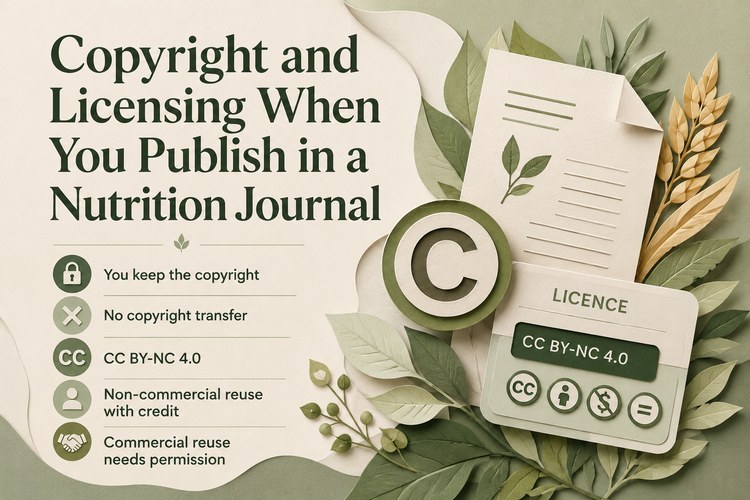
When you publish in this nutrition journal you keep the copyright in your own work. The journal does not ask for a transfer. What you grant is a licence — Creative Commons Attribution-NonCom...
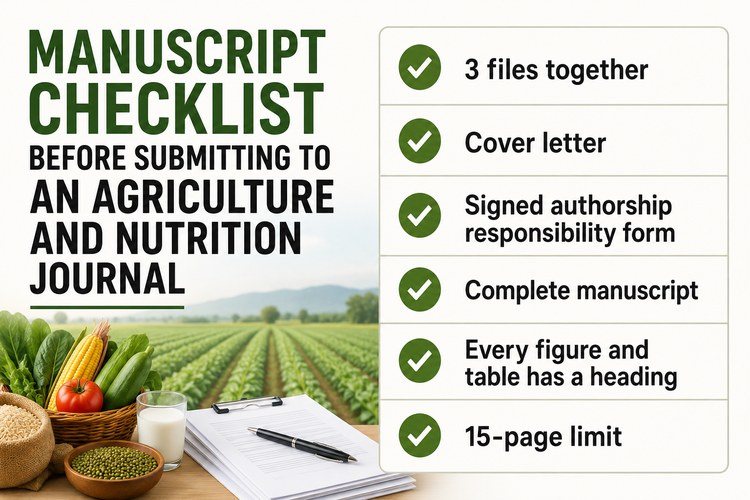
Read MoreMost manuscripts returned by an agriculture and nutrition journal in the first week fail on things the author could have checked in an afternoon: page count, spacing, a missing file, an unst...
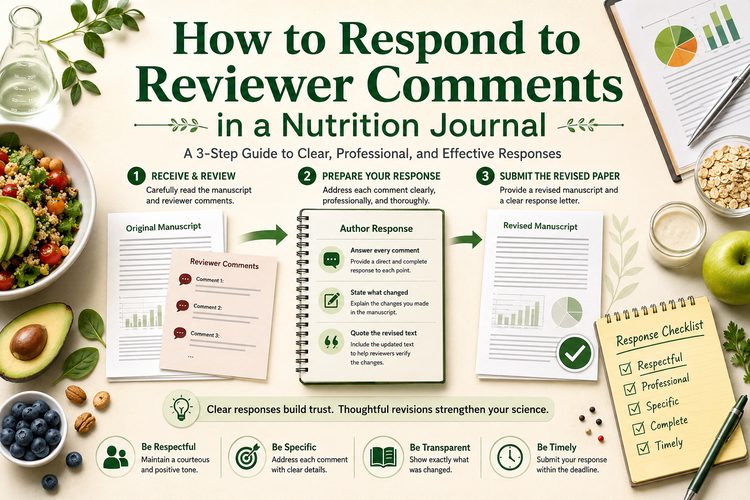
Read MoreAnswer every comment, quote it, say what you changed and where, and give a reason with evidence when you disagree. At this nutrition journal the revised manuscript is expected back within on...
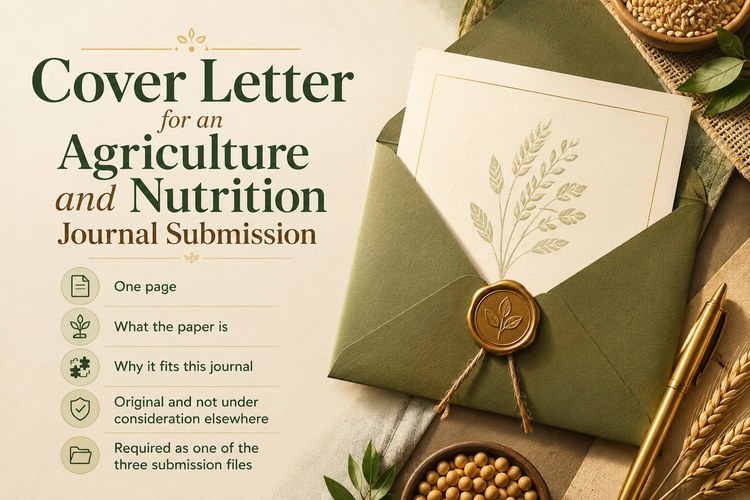
Read MoreA cover letter for an agriculture and nutrition journal is one page that states what the paper is, why it fits this journal, and confirms that the work is original and not under consideratio...
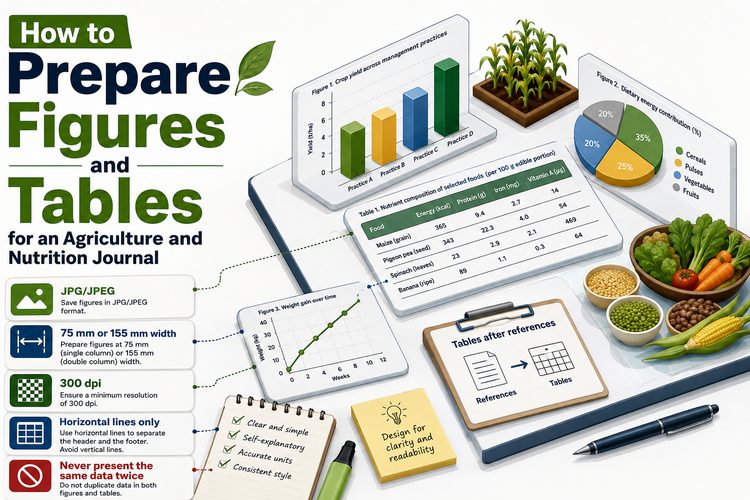
Read MoreFigures go into the manuscript as JPG or JPEG at 75 mm or 155 mm width and 300 dpi. Tables are placed after the references, use horizontal lines only, and are numbered in the order they are...
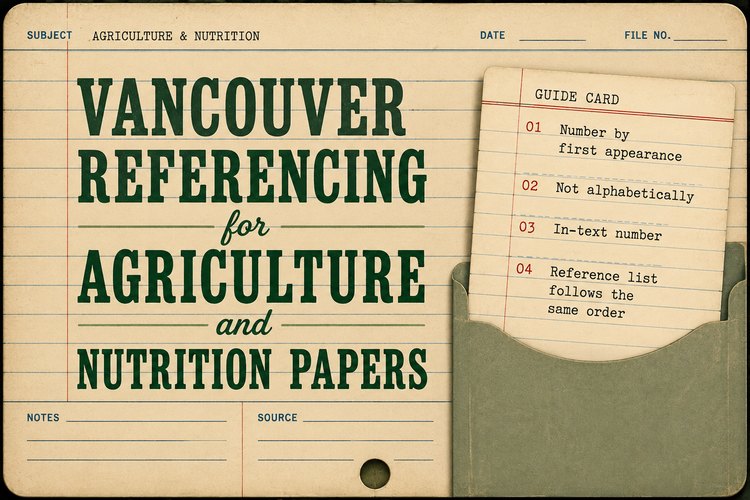
Read MoreVancouver style numbers references in the order they are first cited in the text, not alphabetically. The number goes in the text, and the reference list runs 1, 2, 3 in that same order. Thi...
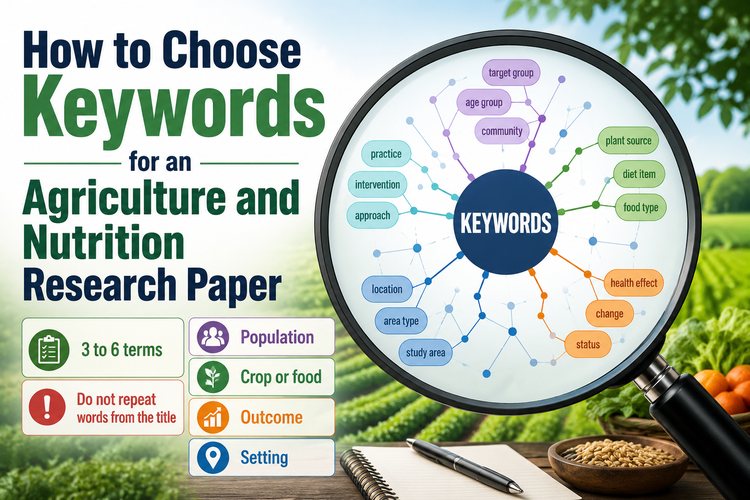
Read MoreKeywords are how somebody who has never heard of your paper finds it. Choose 3 to 6 terms that a searcher would type but that do not already appear in your title, covering the population, th...
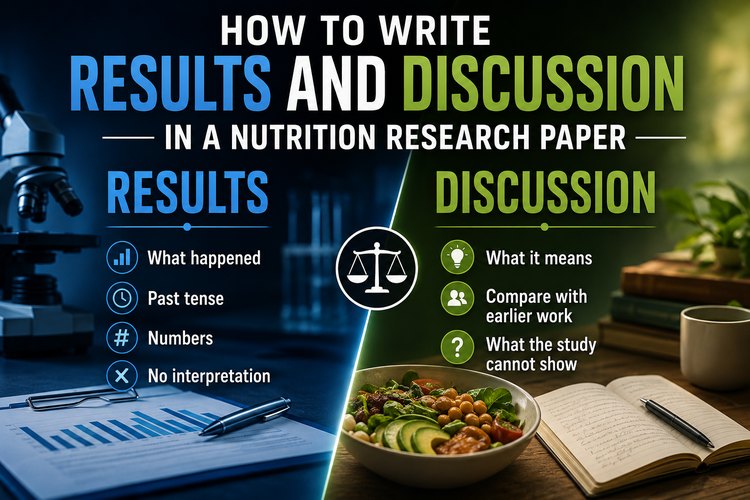
Read MoreResults state what happened, in the past tense, with numbers and no interpretation. The discussion explains what it means, compares it with earlier work, and says what the study cannot show....
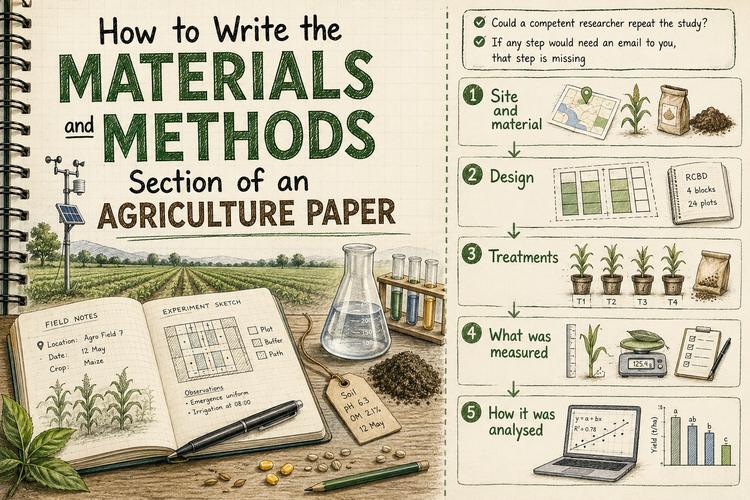
Read MoreThe test for a materials and methods section is simple: could a competent researcher in your field repeat the study from what you wrote, and get a comparable answer? If any step would need a...
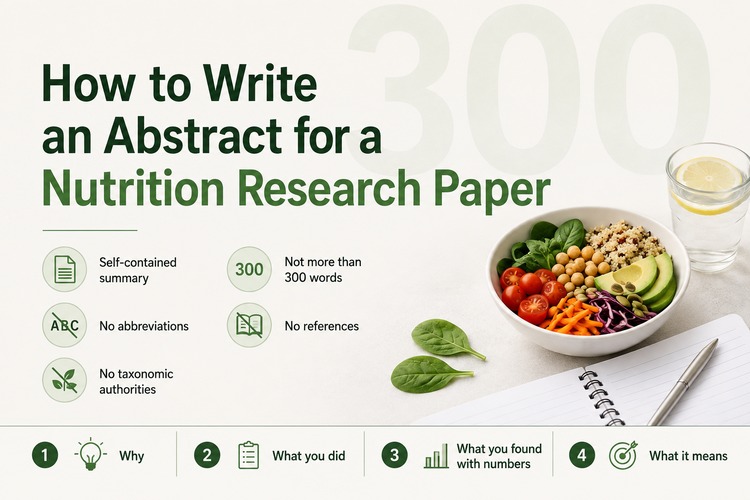
Read MoreAn abstract for a nutrition research paper is a self-contained summary of not more than 300 words that states why the study was done, what you did, what you found with numbers, and what it m...
Read MorePractical guides for researchers publishing in agriculture, food science and nutrition — written by the editorial staff of the International Journal of Agriculture and Nutrition from what actually comes up during review. They deal with the parts of publishing that are rarely taught: what editors and reviewers look for, where manuscripts commonly fall down, and what terms like indexing, DOI, ISSN and open access really mean in practice.
Everything published in this section is listed above. Each guide stands on its own, so there is no order to follow — open whichever one matches the question you have.
A guide explains how something generally works in academic publishing. It does not override what this journal requires. Where the two differ, the journal’s own pages decide.
For the journal’s own rules rather than general guidance, go to the instructions to authors for format and submission steps, the publication policy for how review works here, the plagiarism policy for similarity limits, and the archives to see published papers.
P-ISSN: 2664-6064
E-ISSN: 2664-6072

International Journal of Agriculture and Nutrition